How Long Does a Car Battery Last? (And How to Make It Last Longer)
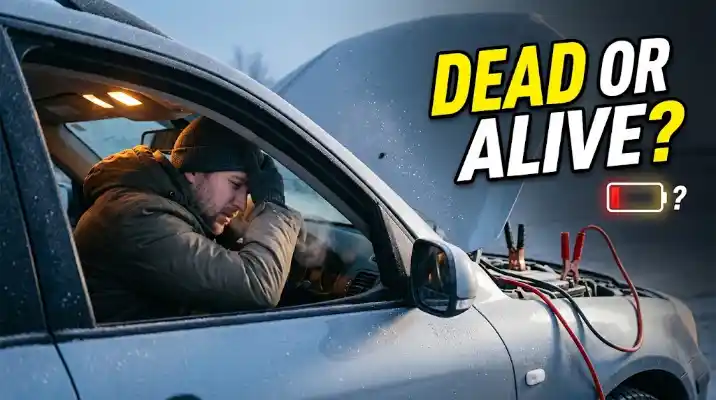
How long does a car battery last? Here is what to expect. A typical car battery lasts 3 to 5 years. Climate is the biggest factor: batteries in hot southern states often fail after about three years, while in cooler northern states many last five years or more. Driving habits matter too. Lots of short trips, long periods parked and heavy use of electronics with the engine off all shorten battery life.
Here is what affects battery lifespan, the warning signs that yours is wearing out, how to test it, and practical ways to make a battery last longer.
Key Takeaways
- Average lifespan: 3–5 years for a standard 12-volt car battery.
- Heat kills batteries faster than cold, even though cold weather is when weak batteries finally fail to start the car.
- Test it yearly after year three. Most auto parts stores test batteries for free.
- Warning signs: slow cranking, dim lights at idle, a battery warning light, a swollen case or corrosion.
- Make it last: drive at least 30 minutes regularly, keep terminals clean, and use a maintainer for cars that sit.
How Long Does a Car Battery Last by Climate?
| Where you live | Typical lifespan | Why |
|---|---|---|
| Hot climates (Southwest, Gulf states, Florida) | About 3 years, sometimes less | Heat speeds up internal corrosion and evaporation of the electrolyte |
| Moderate climates | About 3–5 years | Less extreme heat and cold |
| Cold northern climates | About 4–5+ years | Slower chemical wear, although cold starts demand more power |
AAA has reported that battery life is noticeably shorter in the southern US than in the far north, largely because under-hood temperatures in summer can climb far above the outside air temperature. Heat does the damage; cold weather simply exposes a battery that is already weak.
What Shortens Car Battery Life
- Heat: high temperatures accelerate corrosion of the internal plates and water loss.
- Short trips: starting the engine uses a lot of energy, and a 5–10 minute drive does not give the alternator time to recharge it.
- Long periods parked: modern cars draw a small current even when off, which slowly drains a battery that sits for weeks.
- Deep discharges: leaving lights on or running accessories with the engine off can permanently reduce capacity, especially on standard flooded batteries.
- Vibration and a loose hold-down: a battery that moves around can suffer internal damage.
- Corroded or loose terminals: poor connections mean the battery charges and discharges less efficiently.
- Charging system problems: a weak alternator undercharges the battery, while a faulty voltage regulator can overcharge and cook it.
- The wrong battery type: fitting a standard battery in a car designed for an AGM or EFB battery, common on start-stop vehicles, shortens its life dramatically.
Signs Your Car Battery Is Dying
- The engine cranks slowly, especially on cold mornings
- Clicking when you turn the key or press the start button
- Dim headlights at idle that brighten when you rev the engine
- Electrical glitches, such as the radio resetting or dashboard warnings on start-up
- A battery or charging warning light on the dash
- Start-stop system no longer shutting the engine off at lights
- A swollen or cracked battery case, leaking fluid or a rotten-egg smell
- Heavy white or blue corrosion on the terminals
- The battery is more than 3–4 years old
Many of these signs can also point to an alternator or starter problem, so test before you replace anything.
How to Test a Car Battery
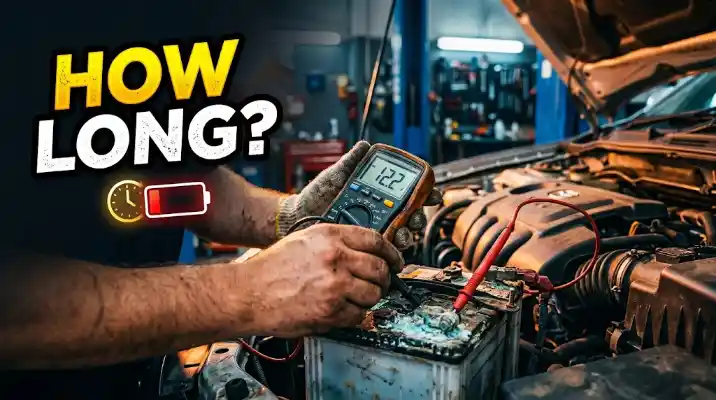
The easiest option is a free test at an auto parts store or repair shop. They use a load or conductance tester that checks both charge and the battery’s ability to deliver starting current. You can also check the resting voltage yourself with an inexpensive multimeter, after the car has been off for a few hours:
| Resting voltage | Approximate state of charge |
|---|---|
| 12.6 V or higher | About 100% charged |
| 12.4 V | About 75% |
| 12.2 V | About 50% |
| 12.0 V | About 25% |
| Below 11.9 V | Discharged; recharge and retest |
With the engine running, a healthy charging system usually shows roughly 13.7 to 14.7 volts. Much lower points to a charging problem; much higher can mean overcharging. A battery that shows good voltage but still cranks weakly may have lost capacity, which only a load test reveals.
Check the Battery Date Code
Most batteries have a sticker or stamp showing when they were made or sold, often as a letter for the month and a number for the year, or a plain month and year. Knowing the age helps you plan a replacement before it strands you.
How to Make Your Car Battery Last Longer
- Drive regularly and longer: aim for at least one drive of 30 minutes or more each week, ideally at steady highway speeds.
- Limit accessory use with the engine off: avoid running the radio, lights or chargers for long periods without the engine running.
- Keep terminals clean and tight: clean corrosion with a baking soda solution and make sure the clamps cannot twist by hand.
- Keep the battery secured: the hold-down should stop it moving at all.
- Park in shade or a garage in hot weather when you can.
- Use a battery maintainer for cars that sit for more than two or three weeks.
- Test yearly after three years, and before winter.
- Replace with the right type: match the group size, cold cranking amps and battery technology your car was built for.
How Long Does It Take to Charge a Car Battery?
| Method | Typical time to recharge a flat battery |
|---|---|
| Trickle charger or maintainer (1–2 amps) | 24 hours or more |
| Standard charger (4–10 amps) | About 4–12 hours |
| Fast or boost setting (20+ amps) | A few hours, but harder on the battery |
| Driving after a jump start | 30+ minutes of driving to restore some charge; a deeply flat battery may never fully recover this way |
A battery that has been completely drained is best recharged slowly with a smart charger and then tested. Relying on the alternator to recharge a flat battery puts extra strain on it and often leaves the battery partly charged.
How Often Should You Replace a Car Battery?
There is no fixed schedule, but most drivers replace a battery every 3 to 5 years. Many owners in hot climates replace proactively around the three-year mark to avoid a no-start. If your battery tests weak, is over four years old, or you are heading into winter or on a long road trip, replacing it before it fails is usually worth the cost.
Hybrid and Electric Car Batteries
Hybrids and EVs have two kinds of batteries. The small 12-volt battery that runs the electronics usually lasts about 3 to 5 years, like a normal car battery, and it can go flat if the car sits unused. The high-voltage drive battery is a different story: it is designed to last many years, commonly 8 to 15 years or well over 100,000 miles, and it carries a long manufacturer warranty, often 8 years or 100,000 miles, and longer in some states.
To help a hybrid battery last, drive the car regularly, avoid leaving it parked for months without charge, keep the battery cooling vents clear and follow the maintenance schedule. For EVs, avoiding frequent charging to 100% and long periods at very high or very low charge helps preserve capacity.
What Does a Replacement Cost?
Expect to pay about $100 to $250 for a standard flooded battery and $200 to $400 for an AGM battery, plus installation if the battery is hard to reach or the car needs battery registration. Many parts stores install easy-to-reach batteries for free and charge a refundable core fee until you return the old one.
Car Battery Life FAQ
Most car batteries last 3 to 5 years. In hot climates the average is closer to 3 years, while in cold northern areas many last 5 years or longer.
Common signs are slow cranking, clicking when you try to start, dim lights at idle, a battery warning light, electrical glitches, corrosion or a swollen case, and a battery older than about 4 years.
Heat does more long-term damage, but cold weather reduces a battery’s available power and makes the engine harder to crank, so weak batteries often fail on the first cold mornings.
Many cars can sit for about two to four weeks before the battery gets too low to start, depending on the battery’s age and the car’s standby power draw. Use a battery maintainer for longer storage.
Yes, the alternator recharges the battery while you drive, but short trips may not replace the energy used to start the engine. A drive of 30 minutes or more helps.
Most drivers replace it every 3 to 5 years. Have it tested yearly after year three and replace it when it tests weak or before winter if it is aging.
It is rare. Some batteries in mild climates with gentle use last 6 to 8 years, but most standard 12-volt batteries need replacing well before 10 years.
The high-voltage hybrid battery commonly lasts 8 to 15 years or well over 100,000 miles and usually has a long warranty. The separate 12-volt battery lasts about 3 to 5 years.