How to Switch Car Insurance (Without a Coverage Gap)
Here is how to switch car insurance without paying twice or leaving a gap. To switch car insurance without a coverage gap, buy and activate your new policy first, then cancel the old one effective the same day (or the day after) the new one starts. You can switch at any time, not just at renewal, and most insurers refund unused premium. Get written confirmation of the cancellation, update your lender if you have a loan or lease, and keep proof of the new coverage in your car.
Key Takeaways
- Order matters: new policy active first, old policy canceled second.
- Timing: you can switch mid-term; switching at renewal may avoid any cancellation fee.
- Refunds: many insurers refund unused premium on a pro-rated basis, though some charge a fee or use short-rate cancellation.
- You cancel the old policy: your new insurer usually cannot cancel it for you.
- Avoid lapses: even a short gap can raise future rates and cause problems with your lender or state DMV.
How to Switch Car Insurance: Step by Step
- Review your current policy: note your coverage types, limits, deductibles, drivers, vehicles, and your renewal date. Check if any claim is still open.
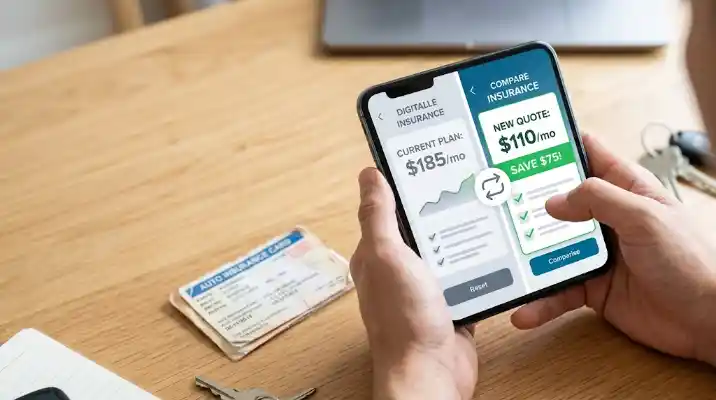
- Shop around: get quotes from several insurers for the same coverage, ideally 2–4 weeks before your renewal. Ask about discounts such as bundling, safe driver, good student, low mileage and paperless billing.
- Compare apples to apples: make sure liability limits, comprehensive and collision deductibles, uninsured motorist, rental and roadside coverage match or improve.
- Buy the new policy: choose a start date, pay the first premium, and download your ID cards.
- Cancel the old policy: contact your old insurer by phone, online or in writing and set the cancellation date to the day your new policy starts, or one day later for overlap.
- Get confirmation: ask for written or email confirmation of the cancellation and the refund amount.
- Update your lender or leasing company: send the new declarations page and list them as loss payee or lienholder.
- Stop automatic payments: cancel autopay with the old insurer once the refund or final bill is settled.
- Replace your proof of insurance: put the new ID card in your car and phone, and check that your state’s insurance verification shows the new policy.
When Is the Best Time to Switch?
- Before your renewal date: the cleanest time, with no mid-term cancellation.
- After a rate increase: your renewal notice is a good reason to shop.
- After a life change: moving, marriage, a new car, adding a teen driver or a credit improvement can change which insurer is cheapest.
- After a ticket or accident drops off your record: often three to five years later, depending on the insurer and state.
- Avoid switching during an open claim until you understand how it will be handled; your old insurer still handles claims that happened while its policy was active.
Will I Get a Refund If I Cancel Mid-Policy?
Usually. Many insurers refund unused premium on a pro-rated basis. Some use a short-rate method or charge a small cancellation fee, and a few do not refund fees already earned. If you pay monthly, you may simply owe nothing further, or receive a small refund. Ask your insurer how cancellation works before you switch.
| Refund type | How it works |
|---|---|
| Pro-rated | You get back the exact unused portion of your premium |
| Short-rate | You get a refund minus a penalty, often a percentage of the unused premium |
| Flat cancellation fee | A set fee is subtracted from your refund |
What Happens If There Is a Gap in Coverage?
- Driving uninsured is illegal in almost every state and can bring fines, license or registration suspension, and vehicle impoundment.
- Higher future rates: insurers see a lapse as higher risk.
- Lender action: a lender can add expensive force-placed insurance to your loan if coverage lapses.
- DMV notices: many states track insurance electronically and may send a suspension notice.
- No coverage for accidents during the gap, leaving you personally responsible for damage and injuries.
Safety note: Never cancel your old policy until the new one is active and you have proof of coverage. If you have an SR-22 or other state filing, make sure the new insurer files it before the old one is canceled, or your license could be suspended. If you drive a car that is titled to someone else, read how to insure a car not in your name before you switch.
Checklist: What to Have Ready When Getting Quotes
- Driver’s license numbers and dates of birth for everyone on the policy
- VINs, make, model and year for each vehicle
- Current declarations page (shows coverages and limits)
- Annual mileage and how each car is used
- Driving history: accidents, claims and tickets in the last 3–5 years
- Lender or leasing company information, if any
Tips to Save When Switching
- Get at least three quotes, including from a local independent agent.
- Ask about bundling with home or renters insurance.
- Consider a higher deductible if you have savings to cover it.
- Ask about telematics or usage-based discounts if you drive safely.
- Pay in full if your insurer offers a discount for it.
- Review coverage on older cars; collision may no longer be worth it on a low-value vehicle.
Switching Car Insurance FAQ
Yes. You can switch whenever you want, not only at renewal. Switching at renewal may avoid cancellation fees.
Buy the new policy first, then cancel the old policy effective the same day or the day after the new one starts, and get written confirmation.
Usually not. You typically need to contact your old insurer yourself to cancel.
Often yes. Many insurers refund unused premium on a pro-rated basis, though some charge a fee or use short-rate cancellation.
Getting quotes usually involves a soft credit check that does not affect your credit score.
You can, but your old insurer will still handle the claim for the accident that happened under its policy. Understand the claim process before switching.
A lapse can lead to fines, license or registration suspension, higher future rates and possible action by your lender.