Bad Brake Booster Symptoms: Signs, Tests and Replacement Cost
The most common bad brake booster symptoms are a hard, stiff brake pedal that takes a lot of leg force to push, longer stopping distances, a hissing sound when you press the pedal, and an engine that stumbles or idles rough when you brake. A brake booster multiplies the force from your foot, so when it fails the brakes still work, but you have to push much harder to stop. That makes it a safety problem that needs attention right away.
What Does a Brake Booster Do?
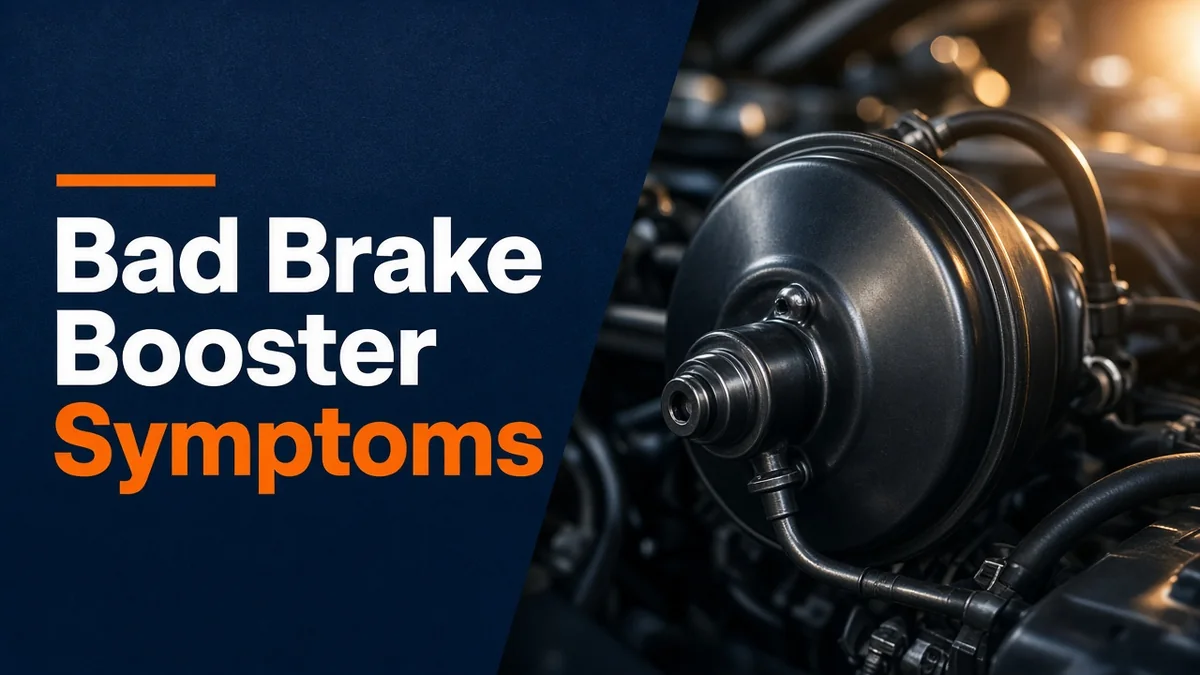
The brake booster is the round, drum-shaped canister mounted on the firewall between the brake pedal and the brake master cylinder. Inside is a rubber diaphragm. On most gas-powered cars, engine vacuum pulls on one side of the diaphragm. When you press the pedal, a valve lets outside air into the other side, and the pressure difference pushes the master cylinder pushrod with far more force than your leg alone could supply.
Without that assist, stopping a 4,000-pound car takes a very firm push. That is why a failing booster is so noticeable: the pedal suddenly feels like you are pushing against a wall.
Types of Brake Boosters
| Type | How It Works | Common In |
|---|---|---|
| Vacuum booster | Uses engine intake vacuum, sometimes with a vacuum pump | Most gas cars, SUVs and light trucks |
| Hydraulic (Hydro-Boost) | Uses pressure from the power steering pump | Many diesel trucks and heavy-duty pickups |
| Electric / electro-hydraulic | An electric motor or pump creates the assist, often integrated with ABS | Many hybrids, EVs and newer vehicles |
Signs of a Bad Brake Booster
1. Hard or Stiff Brake Pedal
This is the classic symptom. The pedal needs much more force to press, and it may feel like it barely moves. It often gets worse the more times you press the pedal in a row, because the small vacuum reserve in the booster is used up and not replenished.
2. Longer Stopping Distance
Because you cannot apply as much force, the car takes longer to stop, especially in an emergency. Many drivers notice this before they notice the pedal feel.
3. Hissing Noise When You Press the Pedal
A hiss from under the dashboard when you brake often means a torn diaphragm or a leaking seal lets air pass through the booster. A cracked vacuum hose can make a similar sound under the hood. Our guide to common car noises can help you tell a vacuum hiss from other sounds.
4. High Brake Pedal Position
The pedal may sit higher than normal and return slowly after you release it, a sign of uneven pressure inside the booster.
5. Engine Stumbles, Idles Rough or Stalls When Braking
On vacuum boosters, a leaking diaphragm lets extra, unmeasured air into the engine’s intake. The engine can run lean, idle roughly or even stall when you press the brake pedal.
6. Check Engine Light or Brake Warning Light
A vacuum leak can trigger lean-running codes (such as P0171 or P0174) and turn on the check engine light. On cars with electric boosters, a fault usually triggers the brake, ABS or stability control warning. Our dashboard symbols guide explains what each light means.
7. Brake Fluid Leak at the Booster
If fluid from a leaking master cylinder seal gets into the booster, it can damage the diaphragm. Look for wet spots where the master cylinder bolts to the booster.
Bad Brake Booster Vs. Bad Master Cylinder
These two parts sit right next to each other and are often confused. The pedal feel is the biggest clue:
| Symptom | Likely Brake Booster | Likely Master Cylinder |
|---|---|---|
| Pedal feel | Hard, stiff, hard to push | Soft, spongy, or sinks to the floor |
| Noise | Hissing when pressing the pedal | Usually silent |
| Engine effect | Rough idle or stall when braking | None |
| Fluid level | Usually normal | May drop, or fluid leaks at the rear of the master cylinder |
| Warning light | Check engine (vacuum leak) or brake light on electric boosters | Brake warning light for low fluid |
How to Test a Brake Booster at Home
These checks apply to vacuum boosters and take only a few minutes. Do them with the car in Park and the parking brake set.
Test 1: Basic Assist Check
- With the engine off, pump the brake pedal five or six times to use up any stored vacuum. The pedal should get firm.
- Hold steady pressure on the pedal.
- Start the engine while still pressing.
- Good booster: the pedal drops slightly as vacuum builds. Bad booster or vacuum supply: the pedal stays hard and does not move.
Test 2: Vacuum Hold Check
- Start the engine and let it run for a minute or two.
- Turn the engine off.
- Wait about 30 to 90 seconds, then press the pedal several times.
- Good: you should get two or three assisted presses before the pedal gets hard. Bad: the pedal is hard on the first press, meaning the booster or check valve is not holding vacuum.
Test 3: Engine Running Leak Check
- With the engine running, press and hold the pedal with moderate pressure for about 30 seconds.
- Good: the pedal stays in position. Bad: the pedal slowly pushes back up toward your foot, or you hear a hiss or the idle changes, pointing to a diaphragm leak.
Also check the vacuum hose from the engine to the booster and the one-way check valve where it enters the booster. A cracked hose or a stuck check valve is far cheaper to fix than the booster itself.
What Causes a Brake Booster to Fail?
- Torn or worn diaphragm: rubber ages and cracks over time.
- Failed check valve: the one-way valve lets vacuum escape.
- Cracked or loose vacuum hose.
- Brake fluid contamination: a leaking master cylinder seal can soak and damage the diaphragm.
- Low engine vacuum: an engine problem, a failing vacuum pump (common on some turbocharged and diesel engines) or a large intake leak.
- Power steering problems: on Hydro-Boost systems, a weak pump, low fluid or a slipping belt reduces assist.
- Electrical faults: on electric boosters, sensor, wiring or module problems.
Brake Booster Replacement Cost
| Item | Typical Cost (US) |
|---|---|
| Vacuum hose or check valve | $20–$150 |
| Vacuum booster part only | $100–$500+ |
| Vacuum booster replacement, parts and labor | About $300–$1,000 |
| Hydro-Boost unit, parts and labor | About $400–$1,200 |
| Electric brake booster module | Often $1,000–$2,500+ at a dealer |
Prices vary by vehicle, labor rate and whether the master cylinder must also be replaced. Labor usually takes about 1.5 to 4 hours because the booster is mounted to the firewall and connects to the brake pedal linkage. A brake bleed may be needed if the master cylinder lines are opened.
Brake system inspections are part of routine service. See our car maintenance schedule by mileage for when brakes should be checked.
Can You Drive With a Bad Brake Booster?
Technically the car will still stop, because the hydraulic brakes work without the assist. But it is not safe to keep driving normally. You will need much more pedal force and more distance to stop, which is dangerous in an emergency. If you notice a sudden hard pedal, drive slowly and directly to a repair shop, leave extra space, or have the car towed.
Safety note: If the brake pedal suddenly becomes very hard while driving, press firmly and steadily with both feet if needed, shift to a lower gear to help slow the car, and use the parking brake gradually as a last resort. Pull over safely and do not continue driving until the brakes are inspected.
Related guides: Check engine light · Car noises explained · Dashboard symbols and meanings
Brake Booster FAQs
The main symptoms are a hard or stiff brake pedal, longer stopping distances, a hissing noise when braking, a high pedal position, rough idle or stalling when you press the brakes, and a check engine or brake warning light.
Yes. A vacuum leak in the booster, check valve or hose reduces power assist and makes the pedal harder to press. It can also cause a rough idle and a check engine light.
It is not recommended. The brakes will still work, but they need far more force and distance to stop. Drive only as far as necessary to reach a repair shop, or have the car towed.
Many brake boosters last the life of the vehicle, often 150,000 miles or more. Fluid contamination, vacuum problems and age can cause earlier failure.