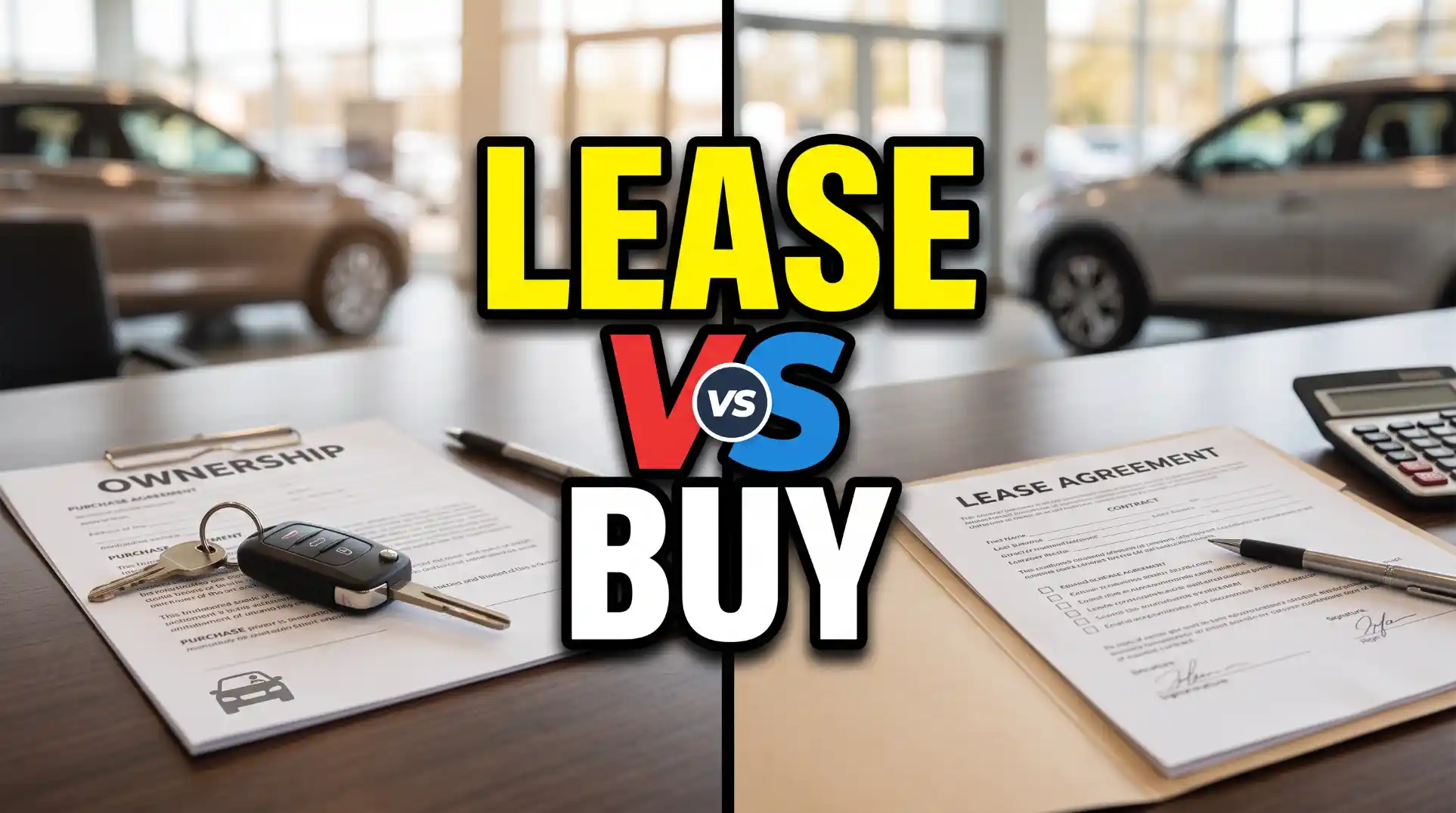
Lease vs Buy a Car: Which Is Better for You?
When you weigh lease vs buy a car, the right answer depends on how you drive and how long you keep cars. Leasing is usually better if you want a lower monthly payment, a new car every two to three years, warranty coverage for most of the time you drive it, and you drive within the mileage limit, often 10,000–15,000 miles a year. Buying is usually better if you keep cars five years or longer, drive a lot, want to customize the car, or want to stop making payments eventually. Over the long run, buying and keeping a car almost always costs less, because you build equity and eventually drive payment-free.
Key Takeaways
- Lease: lower payments, no ownership, mileage limits, wear-and-tear charges.
- Buy: higher payments at first, you build equity, no mileage limits.
- Excess mileage fees: commonly around 10–30 cents per mile over the limit.
- Short term (about 3 years): leasing can cost less out of pocket.
- Long term (6+ years): buying and keeping the car usually wins.
Lease vs Buy at a Glance
| Leasing | Buying | |
|---|---|---|
| Monthly payment | Usually lower | Usually higher |
| Upfront cost | First payment, fees, optional down payment | Down payment, taxes and fees |
| Ownership | None; return the car at lease end | You own it after the loan is paid |
| Mileage | Limited; fees for extra miles | Unlimited |
| Wear and tear | Charges for damage beyond normal wear | Affects resale value only |
| Customization | Restricted | Anything you want |
| Repairs | Mostly under warranty | Your cost after the warranty ends |
| Ending early | Expensive | Sell or trade anytime (may owe more than it is worth early on) |
| Long-term cost | Higher if you always lease | Lower if you keep the car |
Example: 3 Years vs 6 Years
An illustration for a $40,000 new car, using these assumptions: the loan is 60 months at 7% APR with no down payment (about $792 a month); the lease costs $3,000 at signing plus $500 a month for 36 months; the car is worth about 60% of its price after 3 years and about 40% after 6.
| Lease | Buy | |
|---|---|---|
| Paid after 3 years | About $21,000 | About $28,500 |
| Value or equity after 3 years | $0 (car returned) | About $6,300 (worth ~$24,000, owe ~$17,700) |
| Net cost after 3 years | About $21,000 | About $22,200 |
| Paid after 6 years | About $42,000 (two leases) | About $47,500 (loan paid off in year 5) |
| Value after 6 years | $0 | About $16,000 car you own |
| Net cost after 6 years | About $42,000 | About $31,500 |
Your numbers will differ with the car, interest rate, lease deal and resale value, but the pattern holds: leasing is competitive in the short run, and buying wins the longer you keep the car.
When Leasing Makes Sense
- You like driving a new car every few years with the latest safety tech.
- You drive a predictable number of miles within the limit.
- You want lower monthly payments and little risk of big repair bills.
- You use the car for business and your tax advisor confirms lease payments are deductible for your situation.
- The manufacturer is offering a strong lease special on the model you want.
When Buying Makes Sense
- You keep cars five years or longer.
- You drive a lot of miles or your mileage varies.
- You want to modify the car or have pets and kids who are hard on interiors.
- You want to eventually have no car payment.
- You can buy a reliable used car, which avoids the steepest early depreciation.
Hidden Costs of Leasing
- Excess mileage fees: commonly about 10–30 cents per mile; 5,000 extra miles at 25 cents is $1,250.
- Excess wear and tear: dents, curb-rashed wheels, stained seats or worn tires can be charged at turn-in.
- Disposition fee: a fee at lease end if you do not lease or buy another car from the brand.
- Early termination: ending a lease early can cost thousands.
- Gap insurance: often included, but confirm.
Safety note: Before signing a lease, check the capitalized cost (the price), money factor, residual value, mileage allowance, excess mileage rate, and all fees. Negotiate the car’s price just as you would when buying.
Try the calculator: use our lease vs buy calculator to compare leasing and buying.
Lease vs Buy FAQ
Leasing is better for lower payments and driving a new car every few years within mileage limits. Buying is better if you keep cars five years or longer or drive a lot, and it usually costs less in the long run.
Not necessarily, but you build no equity. If you always lease, you will usually pay more over time than buying and keeping a car.
Many leases allow about 10,000 to 15,000 miles a year, with lower-mileage options available.
Commonly around 10 to 30 cents per mile over the limit, as set in your lease contract.
Usually yes, for the purchase option price in your contract, often based on the residual value plus any fees.
Monthly payments are usually cheaper when leasing, but financing and keeping the car is typically cheaper overall.
Buying is usually better because leases charge fees for miles over the limit.