How to Sell a Car Privately: Steps, Paperwork and Safe Payment
To sell a car privately, price it using private-party values and local listings, clean it and gather service records, list it with good photos on a marketplace such as Facebook Marketplace or a car site like Autotrader, meet buyers safely, and get paid in full with verified funds before signing over the title. The key paperwork is the signed title, a bill of sale (required or recommended in most states), an odometer disclosure, and your state’s notice of transfer or release of liability, which protects you from tickets or accidents after the sale. Selling privately usually gets you more money than trading in, at the cost of more time and effort.
Step-by-Step: How to Sell a Car Privately
- Find the title: if you have a loan, contact the lender for the payoff amount and how the title is released.
- Research the price: check pricing guides and similar local listings; price slightly above your minimum to leave room to negotiate.
- Prepare the car: wash, clean the interior, fix small issues, and gather maintenance records.
- Get a vehicle history report: sharing one builds buyer trust.
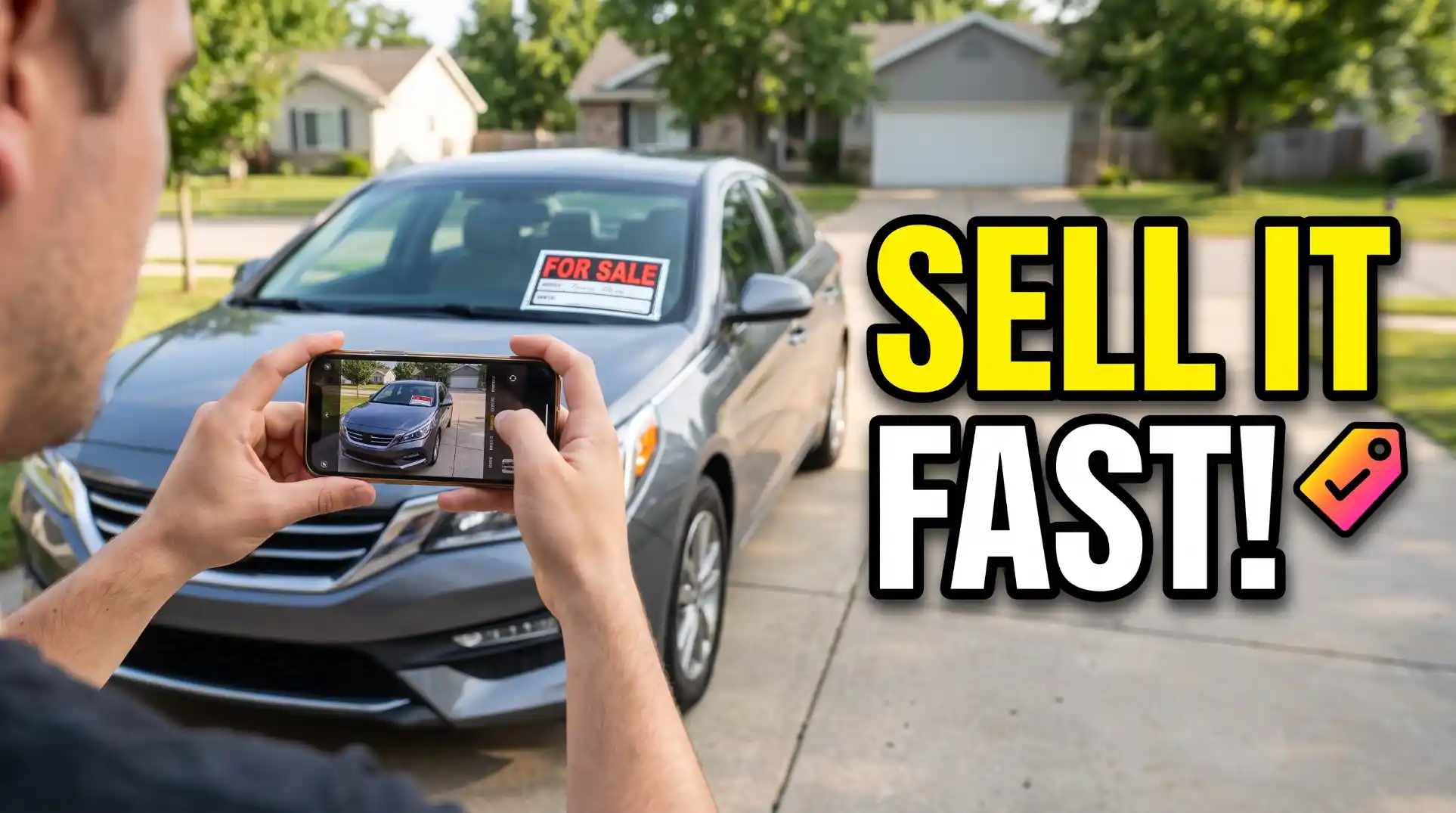
- Take good photos: daylight shots of all sides, interior, dashboard with mileage, tires and any flaws.
- Write an honest listing: year, make, model, trim, mileage, condition, recent repairs, title status and price.
- Screen buyers: talk by phone first; be wary of anyone who will not meet in person.
- Meet safely: in daylight at a public place; many police stations offer safe exchange zones.
- Allow a test drive carefully: check the buyer’s license, ride along, and bring a friend.
- Allow an inspection: a serious buyer may want a mechanic to check the car.
- Negotiate and agree on terms, including that the car is sold as-is if applicable.
- Get paid and complete the paperwork (below), then hand over keys.
- After the sale: remove plates if your state requires, file the release of liability, and cancel insurance and registration as appropriate.
Where to Sell Your Car Privately
The best place to list depends on your car and how fast you want to sell. Most private sellers do best listing in two or three places at once: one free local marketplace for volume and one car-specific site for serious buyers.
| Where to list | Cost to list | Best for | Watch out for |
|---|---|---|---|
| Facebook Marketplace | Free | Everyday cars under about $15,000 and fast local sales | Lowball offers and scam messages; keep chats on the platform |
| Craigslist | Free or a small fee, depending on your area | Older, cheaper cars and cash buyers | No buyer profiles; screen by phone before meeting |
| Autotrader and Kelley Blue Book | Paid listing packages | Newer or higher-value cars | Cost of the listing; check current package prices |
| Cars.com and CarGurus | Free or paid, depending on the option | Reaching buyers who are already comparing prices | Your price is compared directly with dealer listings |
| Enthusiast forums, clubs and auction sites | Varies | Classic, rare, modified or performance cars | Fees and longer selling timelines |
| A for-sale sign and word of mouth | Free | Neighborhood buyers and very cheap cars | Slow; keep your address private until you meet |
If you would rather skip listings entirely, an instant online offer or a dealer purchase is faster but usually pays less; the comparison table further down shows the trade-offs.
How to Price Your Car to Sell
- Look up the private-party value: check two or three pricing guides such as Kelley Blue Book, Edmunds and J.D. Power using your exact trim, options and condition. Use the private-party figure, not the trade-in value.
- Check what similar cars are listed for nearby: search the same year, model and trim within about 50 to 100 miles, with similar mileage. Asking prices are usually a little above actual selling prices.
- Be honest about condition: most sellers rate their car one step better than it is. Worn tires, warning lights, curb rash and overdue maintenance all pull the price down.
- Leave room to negotiate: set your asking price around 5% to 10% above the lowest number you will accept.
- Adjust after a week or two: if you get views but no calls, the price is likely too high. A modest cut usually brings a new wave of interest.
Tips for Selling a Car Privately (and Fast)
- Price it right from day one: a car listed at or slightly below the local market sells far faster than one that needs several price cuts.
- Shoot 20 to 30 clear photos: daylight, clean background, every angle, the interior, odometer, tires, engine bay and any damage. Listings with few or dark photos get skipped.
- Answer the big questions up front: mileage, title status, accident history, recent repairs, why you are selling and which payment methods you accept.
- Have paperwork ready before you list: title in hand, lien payoff arranged, service records and a vehicle history report printed. Buyers trust sellers who are organized.
- Fix cheap, visible problems: a burned-out bulb, a dead key fob battery or a dirty interior costs little to fix and removes easy reasons to haggle. Skip expensive repairs you will not get back.
- Respond quickly: the first serious buyer often messages within hours. Fast replies and flexible viewing times close more sales.
- Get a pre-sale inspection: a recent inspection report from an independent shop answers condition questions before they come up.
Paperwork You Need to Sell a Car
| Document | Purpose | Notes |
|---|---|---|
| Certificate of title | Transfers ownership | Sign in the seller section exactly as your name appears; some states require notarization |
| Bill of sale | Records price, date, VIN, buyer and seller | Include “sold as-is” if applicable; both parties sign and keep copies |
| Odometer disclosure | Federal requirement to record mileage | Often part of the title; some states use a separate form |
| Release of liability / notice of transfer | Tells the DMV you no longer own the car | Time-sensitive; file online or by mail per your state |
| Lien release | Proves the loan is paid off | Needed if there was a lender |
| Maintenance records and history report | Builds trust | Not legally required |
Requirements vary by state. Check your state DMV website for its exact forms, notary rules and deadlines.
State Rules That Can Catch Sellers Out
Title transfers are handled by each state, so a few extra steps apply in some places. Check your state’s DMV or motor vehicle agency website before the sale.
- Emissions certificate: some states, including California, require the seller to provide a recent smog or emissions certificate for most vehicles.
- Safety inspection: a few states require a current inspection before the car can be registered by the new owner.
- Notarized title: states such as Pennsylvania and Ohio require title signatures to be notarized, so plan to meet the buyer at a notary or tag office.
- License plates: in many states plates stay with the seller; in others they stay with the car.
- Deadlines: release-of-liability or notice-of-sale forms often must be filed within a set number of days after the sale.
How to Get Paid Safely
| Payment method | Safety | Tips |
|---|---|---|
| Cash | Good | Count and check bills at the buyer’s bank or deposit them on the spot |
| Cashier’s check | Good if verified | Call the issuing bank using a number you look up yourself; better yet, go to the bank with the buyer |
| Bank transfer at the buyer’s bank | Very good | Complete the sale at the bank when funds are confirmed |
| Payment apps | Mixed | Many apps have limits and chargeback or scam risks for large sales |
| Personal check | Poor | Can bounce after you hand over the car |
| Escrow service | Varies | Use only a well-known service you find yourself, never a link a buyer sends |
Safety note: Common scams include fake cashier’s checks, overpayment requests asking you to wire back the difference, and “escrow” or shipping services suggested by a buyer who cannot meet in person. Do not sign the title or hand over keys until payment is fully confirmed, and never share vehicle documents or personal details before meeting.
Do You Pay Taxes When You Sell a Car?
Usually not. Under IRS rules, a car you used for personal driving is a capital asset. If you sell it for less than you paid, which is true for most used cars, there is no taxable gain and the loss is not deductible. If you sell for more than you paid (plus the cost of improvements), the profit is a capital gain that you report on your tax return. Sales tax is normally paid by the buyer when they register the car, not by the private seller. This is general information, not tax advice.
Selling a Car That Still Has a Loan
- Get the exact payoff amount from your lender.
- If the buyer is paying more than the payoff, complete the sale at your lender’s branch if possible so the loan is paid and the title released.
- If you owe more than the sale price, you must pay the difference to clear the lien.
- Some lenders mail the title to you after payoff; plan for that delay.
Private Sale vs Trade-In vs Instant Offer
| Private sale | Dealer trade-in | Instant online offer | |
|---|---|---|---|
| Price | Usually highest | Usually lowest | Often in between |
| Effort | Most work | Least work | Low |
| Speed | Days to weeks | Same day | A few days |
| Tax benefit | No | Trade-in can reduce sales tax in many states | No |
Try the calculator: use our car depreciation calculator to estimate your car’s future value.
Selling Your Car FAQ
In many states, yes, the seller keeps the plates, but rules vary. Check your state DMV.
A form you file with your state DMV to show you sold the car, protecting you from tickets, tolls or accidents after the sale.
Yes, but check their driver’s license, ride along, and meet in a safe public place.
Selling privately usually brings more money, while trading in is faster and may reduce sales tax on your next car in many states.
A fairly priced, popular car often sells within a week or two. Unusual, high-priced or overpriced cars can take a month or more. Pricing near the local market and responding quickly to buyers are the biggest factors you control.
Most private sales are as-is, meaning the buyer accepts the car in its current condition with no warranty. Write “sold as-is” on the bill of sale, but still disclose known problems honestly; hiding a defect can create legal trouble even in an as-is sale.