Car Dent Repair: DIY Methods and Costs
You can often get a shallow, round dent out of a car at home with a plunger, a suction dent puller or a glue-pull kit, and plastic bumper dents often pop back out with heat from hot water or a hair dryer and a push from behind. If the paint is cracked, the dent has a sharp crease, or it sits on a body line or panel edge, professional repair is the safer choice. Paintless dent repair (PDR) typically costs about $75–$400 per panel, while traditional body shop repair with filler and paint often runs $500–$2,500.
Key Takeaways
- Best DIY candidates: shallow, round dents on flat panels with intact paint.
- Plastic bumpers: heat plus pushing from behind often works.
- Paintless dent repair: about $75–$400 per panel for small to medium dents.
- Body shop with paint: about $500–$2,500 depending on damage and panel.
- Stop DIY if the metal is creased, stretched or the paint is cracked.
Can You Fix the Dent Yourself? Quick Check
| Dent type | DIY? | Best option |
|---|---|---|
| Shallow, round, no paint damage, flat panel | Yes | Plunger, suction cup or glue-pull kit |
| Plastic bumper dent | Often | Heat and push from behind |
| Small door ding | Sometimes | Glue-pull kit or PDR |
| Sharp crease or on a body line | Not recommended | Paintless dent repair specialist |
| Dent with cracked or chipped paint | No (for the dent) | Body shop: repair and repaint |
| Large dent, panel edge, or structural area | No | Body shop |
5 DIY Ways to Get a Dent Out of a Car
1. Plunger Method
- Use a clean cup-style (sink) plunger, not a flanged toilet plunger.
- Wet the plunger rim and the dent with water.
- Press the plunger over the center of the dent to create a seal.
- Pull straight out firmly in short pulls. Repeat a few times.
Works best on large, shallow dents on doors, hoods and quarter panels. It will not fix small dings or creases.
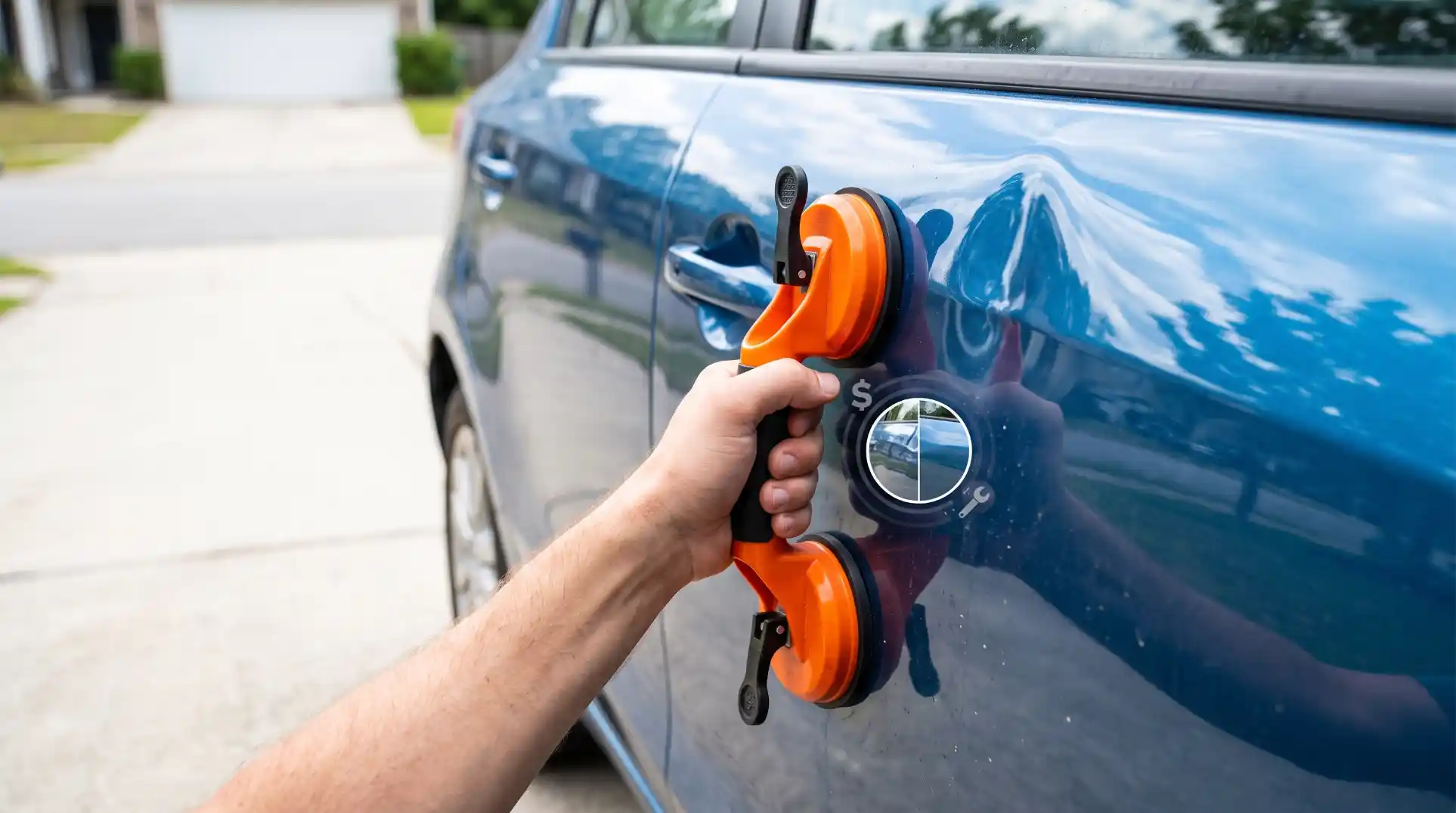
2. Suction Cup Dent Puller
Inexpensive suction pullers work like the plunger but with a handle and better grip. Clean the area, attach the cup, pull steadily, and repeat.
3. Glue-Pull (Paintless) Dent Kit
- Clean the dent with isopropyl alcohol.
- Pick a pull tab that matches the dent size and apply hot glue to it.
- Place the tab in the center of the dent and let the glue set for a few minutes.
- Attach the slide hammer or bridge puller and pull gently in small steps.
- Release the tab with a few drops of isopropyl alcohol and remove leftover glue.
- Tap down any high spots lightly with the kit’s knockdown tool and repeat as needed.
4. Heat for Plastic Bumpers
Pour hot (not boiling if your paint is fragile) water over the dented plastic bumper or warm it with a hair dryer, then reach behind the bumper and push the dent out while the plastic is flexible. Cool it with cold water to set the shape. This is much less effective on metal panels.
5. Hair Dryer and Compressed Air
Heating a panel and then quickly cooling it with an inverted can of compressed air sometimes makes small dents pop, mostly on plastic parts. Results vary, and spraying compressed air upside down can be very cold on skin, so wear gloves.
Safety note: Wear gloves and eye protection when using heat, boiling water or compressed air. Do not heat the same spot for too long, which can damage paint and clear coat, and never use a heat gun near fuel lines, the fuel filler area or plastic trim that can melt.
Dent Repair Costs
| Repair | Typical cost |
|---|---|
| DIY suction or glue-pull kit | About $30–$100 |
| Paintless dent repair, small ding | About $75–$250 |
| Paintless dent repair, larger or harder dent | About $250–$500 per panel |
| Hail damage PDR (whole car) | Varies widely with the number and size of dents; often handled through comprehensive insurance |
| Body shop repair with filler and repaint | About $500–$2,500+ |
| Bumper cover repair or replacement | Varies widely by vehicle and sensors |
Prices vary by location, dent size, access behind the panel, and whether the panel is aluminum, which is harder to work.
Paintless Dent Repair vs Body Shop
| Paintless dent repair (PDR) | Traditional body shop | |
|---|---|---|
| How it works | Specialist massages the metal back from behind or pulls it out | Pulls the dent, fills, sands and repaints |
| Best for | Dings, door dings, hail, dents with intact paint | Cracked paint, creases, large or deep damage |
| Keeps factory paint | Yes | No, the panel is refinished |
| Time | Often same day | Several days |
| Cost | Lower | Higher |
Should You Use Insurance for Dent Repair?
Collision coverage usually covers dents from accidents, and comprehensive coverage covers hail, falling objects and vandalism, both minus your deductible. For a small dent that costs less than or close to your deductible, paying yourself is usually better. For hail damage across the whole car, a comprehensive claim often makes sense.
How to Prevent Dents
- Park away from other cars and shopping cart corrals.
- Use a garage or covered parking during hail season.
- Open doors carefully in tight spaces; add door edge guards.
- Keep a safe following distance to avoid rocks and minor bumps.
Car Dent Repair FAQ
For shallow, round dents with intact paint, try a cup plunger, suction dent puller or glue-pull kit. For plastic bumpers, warm the area and push the dent out from behind.
It works mainly on plastic bumpers. Hot water softens the plastic so you can push the dent out from behind. It does little for metal panels.
Paintless dent repair often costs about $75 to $400 per panel, while body shop repair with paint commonly costs $500 to $2,500 or more.
A method where a technician reshapes the metal from behind or pulls it out without sanding, filling or repainting, keeping the factory paint.
No. Dents with cracked paint, sharp creases, stretched metal or damage on edges often need traditional body repair.
Collision coverage usually covers accident dents and comprehensive covers hail or vandalism, minus your deductible.
Yes, for large, shallow dents on flat panels. It will not fix creases or small door dings.