How to Fix Paint Chips and Scratches on Your Car
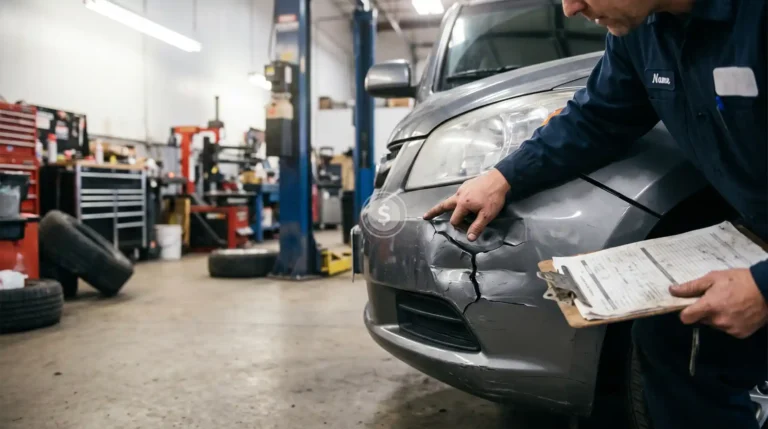
Car paint chips and light scratches are easy to fix at home if you catch them early. To fix a paint chip, clean the spot with rubbing alcohol, dab on thin layers of touch-up paint matched to your car’s paint code, let each coat dry, add clear coat, and after it cures, gently level and polish the area. Light scratches that stay in the clear coat can often be polished out completely. Use the fingernail test to decide: if your nail does not catch, polish it; if it catches, you need touch-up paint or a body shop.
This guide shows how to judge scratch depth, fix chips and scratches step by step, deal with bare metal and rust, and what professional repair costs.
Key Takeaways
- Fingernail test: no catch = clear coat scratch you can usually polish out.
- Chips: fill with thin layers of touch-up paint, then clear coat.
- Find your paint code on the driver door-jamb sticker or in the owner’s manual.
- Fix chips to bare metal quickly to stop rust.
- Costs: DIY kit $15–$70; mobile repair about $150–$300; body shop $250–$800+ per panel.
How Deep Is the Damage?
| What you see and feel | Damage level | Best fix |
|---|---|---|
| Fine line, nail glides over it | Clear coat only | Polish or scratch remover |
| Nail catches slightly, color still visible | Deep clear coat or into the color | Touch-up paint and clear, or professional repair |
| White or gray showing | Through the color to the primer | Touch-up paint and clear coat |
| Shiny silver metal showing | Down to bare metal | Primer, paint and clear, as soon as possible |
| Brown or orange around the chip | Rust has started | Remove rust, then prime and paint |
Modern car paint has three layers over the metal: primer, the colored base coat and a transparent clear coat on top. The deeper the damage goes, the more layers you need to rebuild.
How to Remove Light Scratches (Clear Coat)
- Wash and dry the area thoroughly.
- Apply a small amount of scratch remover or polishing compound to a microfiber applicator.
- Work it in with moderate pressure using overlapping passes for a minute or two.
- Wipe off and inspect in good light. Repeat a few times if needed.
- Finish with a finer polish if the area looks hazy, then protect it with wax or sealant.
A dual-action machine polisher does this faster and more evenly, especially for swirl marks across a whole panel. Do not overdo it; each pass removes a tiny amount of clear coat.
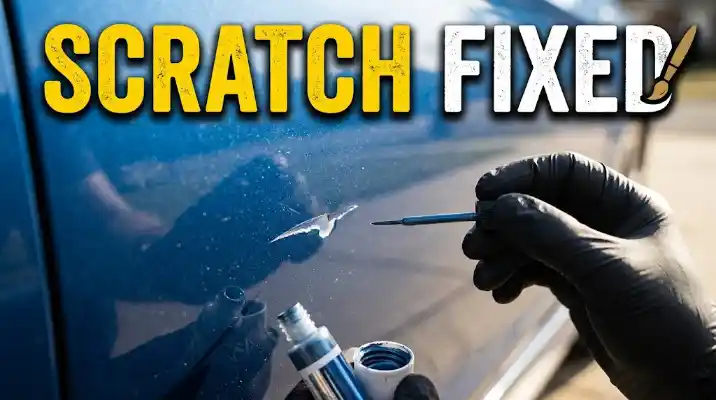
How to Fix Paint Chips With Touch-Up Paint
What You Need
- Touch-up paint matched to your paint code (pen, brush bottle or kit)
- Clear coat touch-up
- Primer if the chip reaches bare metal
- Rubbing alcohol or wax-and-grease remover
- Fine applicators such as micro brushes or toothpicks
- Very fine sandpaper (2,000–3,000 grit) and polishing compound for leveling, optional
Step by Step
- Find your paint code on the sticker in the driver’s door jamb, under the hood or in your manual, and buy the matching touch-up paint.
- Clean the chip with soap and water, then wipe with rubbing alcohol to remove wax and oils.
- Treat bare metal: remove any loose paint or rust with the tip of a fine tool, then dab on a tiny amount of primer and let it dry.
- Apply color in thin dabs: shake the paint well and fill the chip with small dabs rather than brush strokes. Let each thin layer dry for 20–30 minutes.
- Build it up slightly: repeat until the paint sits just level with or very slightly above the surrounding surface.
- Add clear coat: apply one or two thin coats over the color.
- Let it cure: wait at least a few days, ideally a week.
- Level and polish (optional): for a near-invisible repair, wet-sand the raised spot very lightly with 2,000–3,000 grit paper, then polish to blend the shine.
Safety note: work in a ventilated area, keep touch-up paint and solvents away from heat and flames, and wear gloves when handling solvents and rust treatments.
Deeper Scratches
A longer scratch that reaches the primer or metal can be filled with touch-up paint in the same way, working along the scratch with a fine brush. Results on long scratches are usually less invisible than on small chips. If a scratch runs across several panels, is on a very visible spot, or is on a newer car you care about, a professional repair gives a far better finish.
What Does Paint Chip and Scratch Repair Cost?
| Option | Typical cost |
|---|---|
| DIY touch-up paint kit | $15–$70 |
| Scratch remover or polishing compound | $10–$40 |
| Professional polish or paint correction for light scratches | $100–$300 per area |
| Mobile touch-up service | About $150–$300, often for several chips |
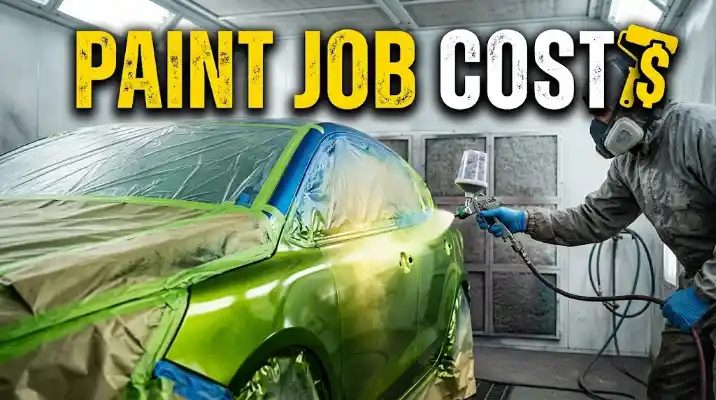
| Body shop repaint of one panel | $250–$800+ |
| Bumper scuff repair | $200–$500 |
How to Get Spray Paint or Paint Transfer Off a Car
Paint transfer from another car or a scuff against a painted wall usually sits on top of your clear coat. Try in order: a clay bar with lubricant, a scratch remover or light polishing compound, and, for stubborn marks, a small amount of a paint-safe adhesive or tar remover. For vandalism with spray paint, act quickly and use products labeled safe for automotive clear coat; test on a hidden area first. A detailer can remove it with less risk than aggressive solvents.
How to Prevent Paint Chips
- Leave extra distance behind trucks and on gravel roads.
- Apply clear paint protection film (PPF) to the hood, bumper and mirrors, which take the most hits.
- Keep the paint waxed, sealed or coated to make chips less likely to spread.
- Fix chips early, before water gets under the paint and rust starts.
Paint Chip and Scratch FAQ
Clean the chip with rubbing alcohol, prime bare metal if needed, dab on thin layers of touch-up paint matched to your paint code, add clear coat, let it cure and then polish to blend.
Use the fingernail test. If your nail does not catch, the scratch is in the clear coat and can usually be polished out. If it catches, it likely needs paint.
On the sticker in the driver door jamb, under the hood or in the owner manual. A dealer can also look it up from your VIN.
Light scratches can be polished for $10 to $40 DIY or about $100 to $300 professionally. Deeper scratches that need repainting cost about $250 to $800 or more per panel at a body shop.
Yes, especially for small chips. Dab thin layers rather than drawing lines, add clear coat, and polish after curing for the best result.
Yes, especially if bare metal is showing. Water and salt can get under the paint and start rust that spreads.
It can slightly improve very light scuffs because it is mildly abrasive, but a proper scratch remover or polishing compound works better and more predictably.
Try a clay bar, then a scratch remover or light polishing compound. For stubborn marks, use a paint-safe adhesive or tar remover after testing on a hidden spot.