Car Window and Windshield Repair Cost: Chips, Glass and Power Windows
Windshield repair cost is often lower than people expect, and insurance may cover it. Car glass repairs range from about $60 to $150 for a windshield chip, $250 to $600 for a standard windshield replacement, and $600 to $1,500 or more when the windshield holds cameras that need recalibration afterward. A shattered side window usually costs $150 to $400, and a window that will not go up or down, usually a failed regulator or motor, costs about $250 to $600. Comprehensive insurance often covers glass, and many insurers repair chips for free.
This guide covers repair and replacement costs for every type of car window, when a chip can be repaired, how driver-assist camera calibration affects the bill, and how insurance handles glass claims.
Key Takeaways
- Chip repair: $60–$150, often free with comprehensive coverage.
- Windshield replacement: $250–$600 standard, $600–$1,500+ with camera calibration or special glass.
- Side window: $150–$400; rear window: $250–$800.
- Window stuck up or down: regulator or motor, about $250–$600.
- Repair chips fast: a small chip can spread into a crack that needs a full replacement.
Car Glass Repair and Replacement Costs
| Job | Typical cost | Notes |
|---|---|---|
| Windshield chip or small crack repair | $60–$150 | Resin repair; many insurers waive the deductible |
| Windshield replacement, standard | $250–$600 | Aftermarket glass on common cars |
| Windshield replacement with ADAS calibration | $600–$1,500+ | Cameras for lane-keeping and emergency braking must be recalibrated |
| ADAS calibration alone | $150–$600 | Static, dynamic or both |
| Side (door) window glass | $150–$400 | Tempered glass; includes cleaning out broken glass |
| Quarter or vent window | $150–$450 | Small fixed windows |
| Rear window (back glass) | $250–$800 | Defroster lines and antennas raise the cost |
| Sunroof glass | $300–$1,000+ | Panoramic roofs cost more |
| Power window regulator or motor | $250–$600 | Luxury and SUV models can reach $900 |
| Window switch | $75–$250 | Cheaper fix when the motor is fine |
Prices are typical 2026 US ranges. Luxury brands, heated or acoustic glass, heads-up display windshields and OEM glass cost more; mobile service is often included at no extra charge.
Windshield Chip Repair vs Replacement
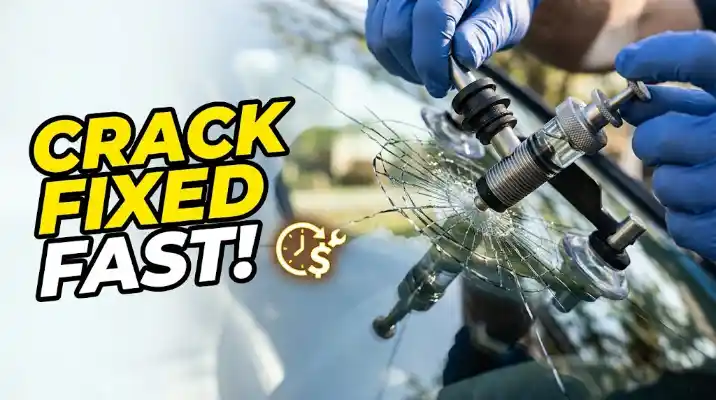
A chip or crack can often be repaired with resin if it is:
- Smaller than a quarter for a chip, or shorter than about 6 inches (roughly a dollar bill) for a crack
- Not directly in the driver’s line of sight
- Not at the edge of the windshield, where cracks weaken the glass structurally
- Not penetrating both layers of the laminated glass
Otherwise the windshield needs replacing. Get chips repaired quickly: temperature swings, bumps and car washes can turn a small chip into a long crack in days. Until then, cover the chip with clear tape to keep dirt and water out, and avoid blasting the defroster on a cold windshield.
Why Newer Windshields Cost More: ADAS Calibration
Many newer cars have cameras and sensors mounted behind the windshield for lane-keeping assist, automatic emergency braking, adaptive cruise control and traffic sign recognition. After a windshield replacement, these cameras must be recalibrated so they aim correctly. Calibration can be done in a shop with targets (static), on the road with a scan tool (dynamic), or both, and it typically adds $150 to $600. Skipping it can cause warning lights or, worse, systems that do not react correctly. Ask the glass shop whether calibration is included and whether they use OEM or equivalent glass that works with your camera system.
Side Window Replacement
Side windows are made of tempered glass that shatters into small pieces when broken, often in a break-in. Replacement includes vacuuming glass out of the door, seats and carpet. It usually takes about an hour. Until you can get it fixed, cover the opening with heavy plastic and painter’s tape, and do not leave valuables in the car.
Window Will Not Go Up or Down?
| Symptom | Likely cause | Typical cost |
|---|---|---|
| No sound, window does not move | Switch, fuse or wiring | $20–$250 |
| Motor hums or clicks but the glass does not move | Broken regulator | $250–$500 |
| Window moves slowly or stops partway | Worn motor or regulator | $250–$600 |
| Glass drops into the door or sits crooked | Broken regulator or loose glass clips | $250–$500 |
| Only works from the driver’s master switch | Faulty individual switch | $75–$250 |
If a window is stuck open, many cars let you close it by holding the switch while opening and closing the door, or by gently lifting the glass while pressing the switch. A shop can also secure the glass temporarily. Some models allow a window “reset”: hold the switch up for a few seconds after it closes to restore auto-up.
Does Car Insurance Cover Windshield and Window Replacement?
- Comprehensive coverage usually covers glass damage from rocks, falling objects, weather and vandalism, minus your deductible.
- Chip repairs: many insurers waive the deductible because a repair prevents a costlier replacement later.
- Zero-deductible states: a few states, including Florida, Kentucky and South Carolina, require insurers to waive the deductible for windshield replacement when you have comprehensive coverage, according to insurer guides. Rules can change, so check with your insurer.
- Full glass coverage: an optional add-on in many states that lowers or eliminates your glass deductible, often for a small annual cost.
- Liability-only policies do not cover damage to your own glass.
If the replacement costs less than or close to your deductible, paying out of pocket may be simpler. Glass claims generally have less impact on premiums than collision claims, but ask your insurer.
OEM vs Aftermarket Glass
OEM glass is made by or for your car’s manufacturer; aftermarket glass is made by other companies to fit. Quality aftermarket glass is usually fine for older cars. For vehicles with cameras, heads-up displays, rain sensors or acoustic glass, OEM or OEM-equivalent glass helps calibration and features work properly. Some insurance policies specify which type they pay for, so ask before the work starts.
Is It Safe or Legal to Drive With a Cracked Windshield?
A small chip outside your line of sight is usually not an immediate danger, but cracks can spread and a damaged windshield provides less support in a rollover and for passenger airbag deployment. Many states prohibit cracks or damage that obstruct the driver’s view, and a cracked windshield can fail a state inspection. Get it assessed promptly.
How to Keep Your Windshield Clear and in Good Shape
- Clean the inside: use an ammonia-free glass cleaner and two microfiber towels; a hazy film often comes from plastics off-gassing or vape and smoke residue.
- Replace wiper blades every 6–12 months so they do not scratch the glass.
- Leave more space behind trucks on gravel roads to avoid rock chips.
- Warm up gradually in winter: blasting hot air on an icy windshield can spread existing chips.
- Avoid slamming doors with a fresh chip, which can spread it.
Car Glass Repair FAQ
Usually $250 to $600 for a standard windshield and $600 to $1,500 or more when the car has driver-assist cameras that need recalibration or special glass.
About $60 to $150, and many insurers cover chip repair with no deductible if you have comprehensive coverage.
Often yes if the crack is shorter than about 6 inches, not in the driver’s direct line of sight and not at the edge. Larger or edge cracks usually require replacement.
Typically $150 to $400, including cleaning up the broken glass. Luxury vehicles can cost more.
A failed regulator or motor usually costs about $250 to $600. A bad switch or fuse is cheaper, often $20 to $250.
Comprehensive coverage usually does, minus your deductible. Many insurers waive the deductible for chip repairs, and a few states require no deductible for windshield replacement.
It is the process of re-aiming the cameras and sensors behind the windshield that run features like lane-keeping and automatic emergency braking. It typically costs $150 to $600.
The installation takes about an hour, but the adhesive needs time to cure, often an hour or more before driving. Calibration can add another hour or two.