Transmission Warning Light: Meaning, Causes and What to Do
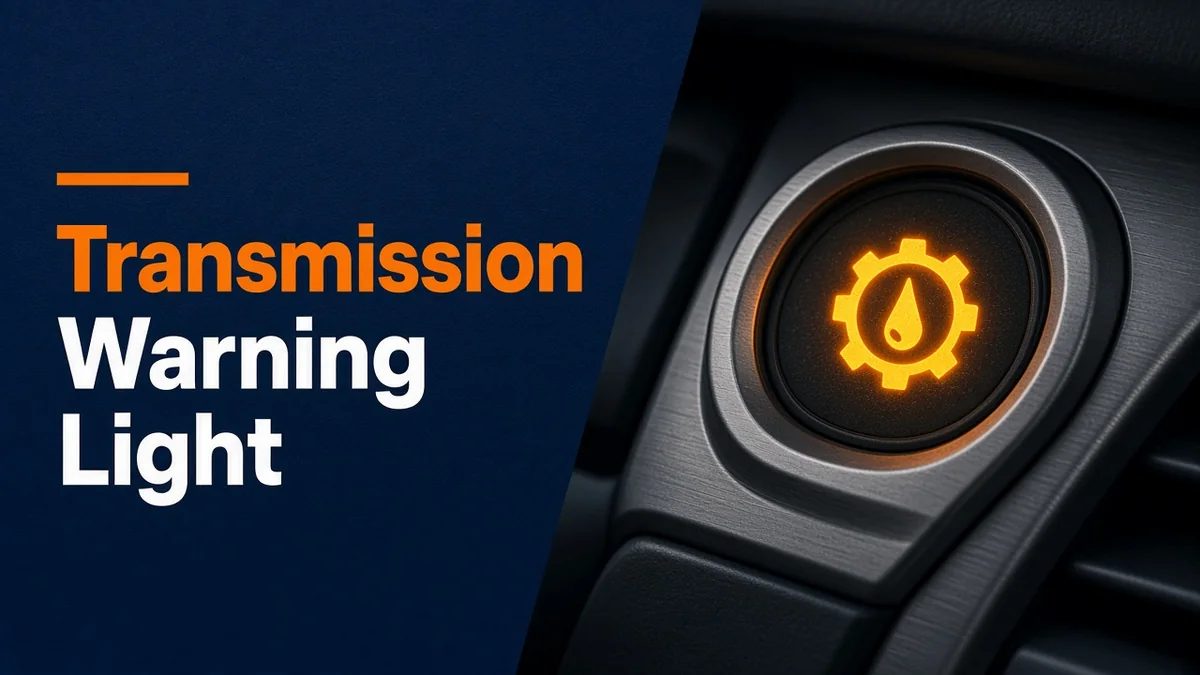
A transmission warning light means the car’s computer has detected a transmission problem, most often overheating, low or degraded fluid, or an electrical or sensor fault. It usually looks like a gear with an exclamation point or a thermometer inside, or it may appear as a text message such as “Transmission Hot” or “Service Transmission.” On some cars, a flashing “O/D OFF” light serves the same purpose. If the light comes on, reduce speed, avoid heavy acceleration and towing, and pull over safely to let the transmission cool. Then check the fluid if possible and have the codes read before driving far.
What the Transmission Warning Light Looks Like
| Symbol or Message | Common On | Meaning |
|---|---|---|
| Gear with exclamation point (!) | Many brands | Transmission fault detected |
| Gear with thermometer | Many brands | Transmission fluid is overheating |
| “AT” or “A/T” light | Some Asian brands | Automatic transmission fault |
| Flashing “O/D OFF” | Older Toyota, Ford, others | Transmission fault code stored |
| “Transmission Hot” / “Trans Temp” message | Trucks and SUVs | Fluid temperature too high |
| “Service Transmission” or “Shift to Park” message | Many newer cars | Fault or shifter problem |
| Wrench icon | Ford, some others | Powertrain fault, often transmission-related |
Symbols vary by manufacturer, so check your owner’s manual. Our dashboard symbols guide covers other common warning lights.
What Causes the Transmission Warning Light?
1. Transmission Overheating
Heat is the number one enemy of automatic transmissions. Towing a heavy trailer, climbing long grades, driving in hot weather, heavy stop-and-go traffic or rocking the car out of snow or mud can push fluid temperatures too high. Most automatic transmissions run normally around 175 to 225°F, and many cars warn the driver somewhere above about 240 to 260°F.
2. Low or Degraded Transmission Fluid
Low fluid from a leak, or old, burnt fluid that has lost its protective properties, can cause overheating, slipping and harsh shifts. Healthy ATF is usually red or pink and translucent; dark brown fluid with a burnt smell needs attention.
3. Faulty Sensors
Transmission fluid temperature sensors, input and output speed sensors, and range (position) sensors feed data to the computer. A failed sensor can turn on the light even if the transmission itself is fine.
4. Shift Solenoid Problems
Solenoids control fluid flow for shifting. A failing solenoid can cause harsh, delayed or missed shifts and trigger codes such as P0750 to P0770.
5. Torque Converter Problems
Torque converter clutch issues can cause shudder, slipping and overheating, and set codes such as P0740 to P0744.
6. Electrical or Computer Faults
Damaged wiring, corroded connectors, low battery voltage or a transmission control module (TCM) problem can trigger warnings and erratic shifting.
7. Internal Mechanical Wear
Worn clutches, bands or a failing pump cause slipping, flaring revs and delayed engagement, and eventually turn on the warning light.
What to Do When the Transmission Light Comes On
- Reduce speed and load: ease off the throttle, stop towing if possible, and turn off features that add load.
- Pull over safely when you can, shift to Park and let the engine idle for a few minutes if the message says the transmission is hot. Idling in Park lets the cooler work without load on the transmission. If the engine is also overheating, turn it off.
- Wait for the light to go off or the temperature gauge to drop, often 15 to 30 minutes.
- Check the fluid if your car has a dipstick, following the procedure in your manual. Some transmissions must be checked by a shop.
- Look for leaks under the car: red or brown fluid near the middle or front.
- Get the codes read: a scan tool shows transmission codes that tell you where to start.
- Drive gently to a shop if the light stays off and the car shifts normally. If the light returns, the car is in limp mode or it slips badly, have it towed.
If you need a tow, our guide on how much it costs to tow a car shows typical prices. When the check engine light is on too, the stored codes are especially helpful.
Can You Drive With the Transmission Light On?
| Situation | Recommendation |
|---|---|
| “Transmission Hot” warning while towing or climbing | Pull over and let it cool; resume gently only after it clears |
| Light on, car shifts normally, no slipping | Drive gently to a shop soon |
| Light on with limp mode (stuck in one gear) | Drive only a short distance at low speed, or tow |
| Light on with slipping, grinding, burning smell or no movement | Stop driving and tow |
| Light on with fluid leaking heavily | Stop driving; low fluid can destroy the transmission quickly |
Transmission Warning Light Vs. Other Lights
- Check engine light: covers the whole powertrain, including many transmission codes.
- Engine temperature light: engine coolant overheating, not transmission fluid.
- O/D OFF (steady): on many cars this simply means overdrive has been turned off with a button, which is normal.
- AWD or 4WD warning: a drivetrain issue, not always the transmission itself.
If the engine temperature gauge is also high, follow our guide on what to do when your car overheats.
How Much Does It Cost to Fix?
| Repair | Typical Cost (US) |
|---|---|
| Code scan | Free to $150 |
| Fluid top-off | $10–$50 |
| Transmission fluid change | $100–$250 |
| Transmission fluid flush | $150–$400 |
| Speed or temperature sensor | $100–$400 |
| Shift solenoid or solenoid pack | $150–$800 |
| Transmission cooler or cooler lines | $200–$900 |
| Torque converter replacement | $600–$2,000+ |
| Transmission rebuild | $2,000–$4,500+ |
| Transmission replacement | $3,000–$8,000+ |
Prices vary by vehicle and region. Diagnosis first can save money, because many warnings are caused by fluid, sensors or wiring rather than a failed transmission.
How to Prevent Transmission Warnings
- Change transmission fluid at the interval in your manual, or sooner if you tow or drive in heat
- Use only the fluid type your manufacturer specifies
- Install an auxiliary transmission cooler if you tow regularly
- Use tow/haul mode and lower gears on long grades
- Avoid rocking the car back and forth to get unstuck for long periods
- Fix leaks promptly
Checking fluid is quick on cars with a dipstick. See our guide on how to check car fluids.
Safety note: Transmission fluid can be extremely hot after hard driving. Let the vehicle cool before checking fluid or touching components, and never get under a car supported only by a jack. If the vehicle will not move or shifts unpredictably, turn on hazard lights and call for roadside help.
Related guides: Dashboard symbols · Check engine light · How to check car fluids
Transmission Light FAQs
It means the car has detected a transmission problem, often overheating, low or degraded fluid, a faulty sensor or solenoid, or internal wear.
Fix the underlying problem first. The light often turns off on its own after the issue is resolved, or a technician can clear codes with a scan tool. Clearing codes without a repair only hides the problem.
Yes. Low fluid can cause overheating, slipping and pressure problems that trigger the transmission warning light.
A flashing transmission or O/D OFF light usually means a fault code has been stored. Have the codes read soon to find the cause.
Not necessarily. Many warnings are caused by fluid, sensors, solenoids or wiring. A proper diagnosis can often avoid a costly replacement.