Best Time to Buy a Car: Best Month, Holiday and Day (2026)
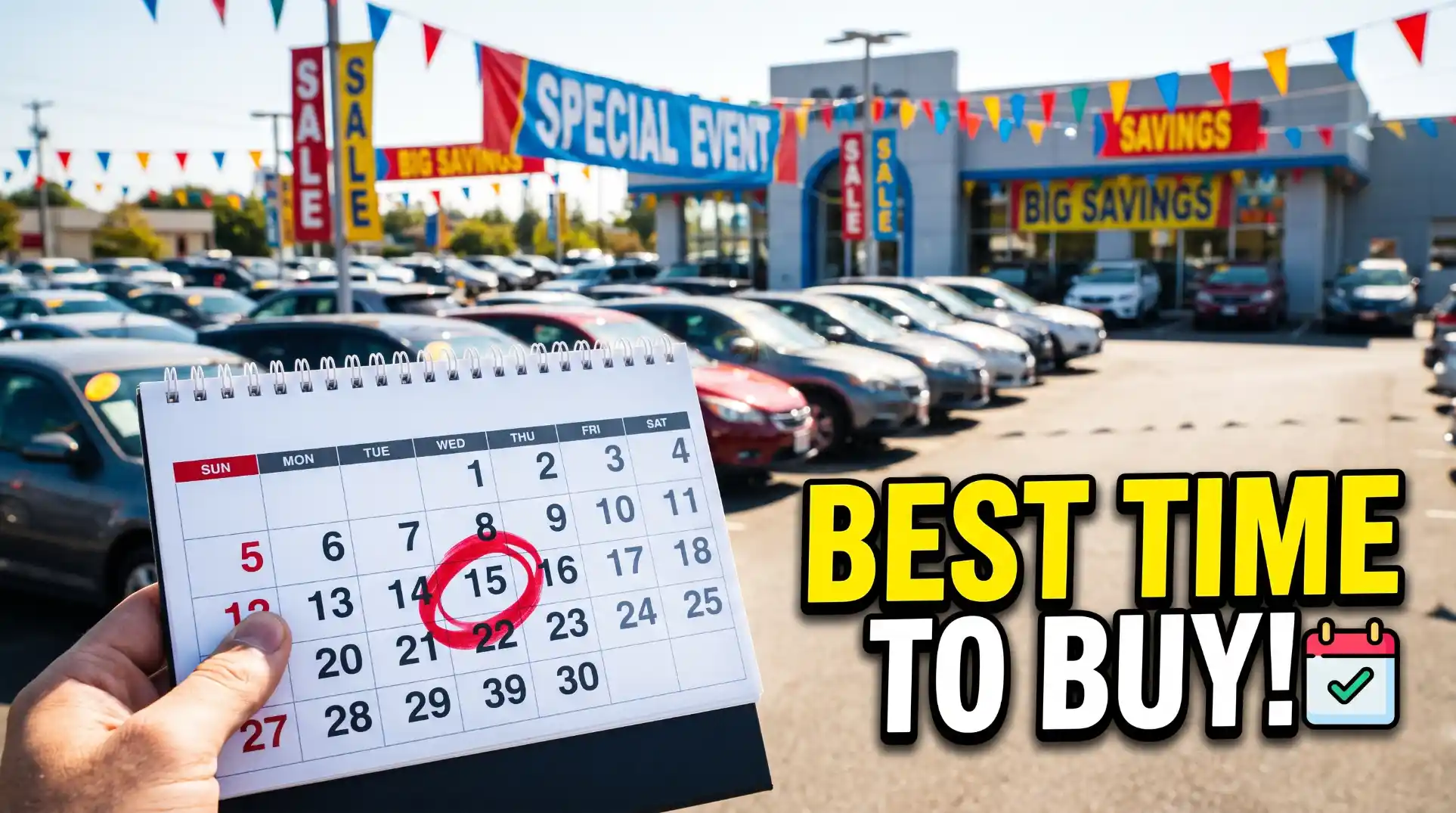
The best time to buy a car depends on the calendar as much as the deal. The best time of year to buy a car is usually October through December, when Edmunds’ transaction data has historically shown the biggest discounts, with late December often best for new cars as dealers chase year-end targets. The end of any month or quarter, holiday sales weekends such as Black Friday, and the model-year changeover when new models arrive are also good times. For used cars, Edmunds data points to October and November. On a weekly basis, weekdays such as Monday are quieter, giving you more attention and time to negotiate.
Best Time to Buy a Car, at a Glance
| Timing | Why it can help | Watch out for |
|---|---|---|
| October–December | Year-end sales goals, holiday promotions, outgoing model years | Fewer choices of outgoing models late in the year |
| Late December | Annual targets and bonuses, strong incentives | Busy showrooms right after Christmas |
| End of the month or quarter | Monthly and quarterly quotas | Rushed decisions; still read every document |
| Holiday weekends (Memorial Day, Labor Day, Black Friday) | Manufacturer incentives and advertised sales | Crowds; “sale” prices are not always the lowest |
| Model-year changeover (often late summer to fall) | Discounts on last year’s models | Limited colors and trims |
| Weekdays (such as Monday) | Less busy, more time with staff | Some incentives are weekend-only |
Best Month to Buy a Car: Month-by-Month
| Month | New cars | Used cars | Why |
|---|---|---|---|
| January | Good | Good | Leftover prior-year models; slow showroom traffic after the holidays |
| February | Fair | Good early, then tighter | Presidents Day sales; tax refunds start lifting used-car demand |
| March | Fair | Weaker | Quarter-end push for new cars, but tax-refund buyers firm up used prices |
| April | Fair | Weaker | Spring demand stays high |
| May | Good | Fair | Memorial Day incentives and month-end targets |
| June | Fair | Fair | End of the second quarter |
| July | Fair | Fair | July 4 sales; some new model years start arriving |
| August | Good | Fair | Model-year changeover begins; outgoing models get discounts |
| September | Very good | Good | Labor Day sales, quarter-end and model-year clearance |
| October | Very good | Very good | Changeover discounts continue; softer used demand |
| November | Very good | Very good | Black Friday and early year-end events |
| December | Best | Good | Annual targets, year-end incentives and leftover inventory |
These ratings reflect long-running seasonal patterns. They are a guide, not a guarantee: the specific model’s inventory and incentives matter more than the month.
Is December Still the Best Month?
Historically, yes. Edmunds data from 2015 to 2020 showed December with the largest average discount off MSRP, about 6.5%. Since the pandemic disrupted supply, though, Edmunds analysts have said that no seasonal trend has held up reliably, because inventory and demand for individual models swing more than the calendar. December still tends to bring year-end incentives and motivated dealers, but a well-stocked model in March can be a better deal than a scarce one in December.
Best Time to Buy a New Car
New-car deals are driven by sales targets and incentives. Automakers and dealers set monthly, quarterly and annual goals, and hitting them can mean large bonuses for salespeople, so they may accept a thinner profit on your car late in a sales period. When new model years arrive, dealers also need to clear space for them, and manufacturers often add cash rebates or special financing on outgoing models.
- Target the last few days of the month, especially in December.
- Look for outgoing model-year cars once the new models are in stock.
- Check the manufacturer’s website for current rebates and financing offers.
- Compare quotes from several dealers by email or phone before visiting.
Best Holidays to Buy a Car
- New Year’s weekend: the tail end of December sales plus leftover prior-year models.
- Presidents Day (February): one of the first big sales weekends of the year.
- Memorial Day (May): manufacturer incentives often line up with month-end targets.
- Fourth of July: mid-year sales as some new model years start arriving.
- Labor Day (September): model-year clearance plus quarter-end goals.
- Black Friday (November): year-end promotions start, often with financing deals.
Holiday “sale” prices are advertised to bring in traffic. Compare out-the-door quotes from several dealers by email before you go, and remember that a quiet weekday near month end can beat a crowded holiday weekend.
Best Time to Buy a Used Car
Used car prices follow demand. Edmunds data suggests October and November are good months for used-car shoppers, partly because year-end new-car promotions pull buyers toward new vehicles. Demand for used cars often rises in late winter and early spring as tax refunds arrive, which can firm up prices.
- Shop in the fall and early winter when demand tends to be softer.
- Watch for lease returns, which add supply of late-model used cars.
- Private-party sellers may be more flexible when they have already bought their next car; see how to buy a used car safely.
When Not to Buy
- When you are rushed: a broken-down car or a deadline weakens your negotiating position.
- Right after a redesigned model launches: hot new models often sell near full price.
- Early spring for used cars: tax refund demand can push prices up.
- Busy Saturday afternoons: less attention and more pressure.
Timing Matters Less Than Preparation
The biggest savings usually come from preparation, not the calendar:
- Know the car’s fair market price and the out-the-door total.
- Get loan pre-approval so you can compare dealer financing.
- Get quotes from multiple dealers.
- Know your trade-in value and sell privately if it pays more.
- Be ready to walk away.
Try the calculator: use our car affordability calculator to see how much car fits your budget.
Best Time to Buy FAQ
They can be, especially Black Friday and year-end events with manufacturer incentives, but always compare the out-the-door price.
Many new model years arrive in late summer and fall, though timing varies by automaker and model.
For used cars, March and April are often the worst because tax refunds bring in more buyers and prices firm up. For new cars, the first weeks of a month and the weeks right after a hot new model launches tend to offer the least room to negotiate.
December has historically been the cheapest, with Edmunds data from 2015 to 2020 showing the largest average discount, about 6.5% off MSRP. Since the pandemic, model-specific inventory matters more than the month.
December is often the best month for new cars, and October through December has historically offered the biggest discounts, according to Edmunds data.