Buying a Car Out of State: Taxes, Registration and Shipping
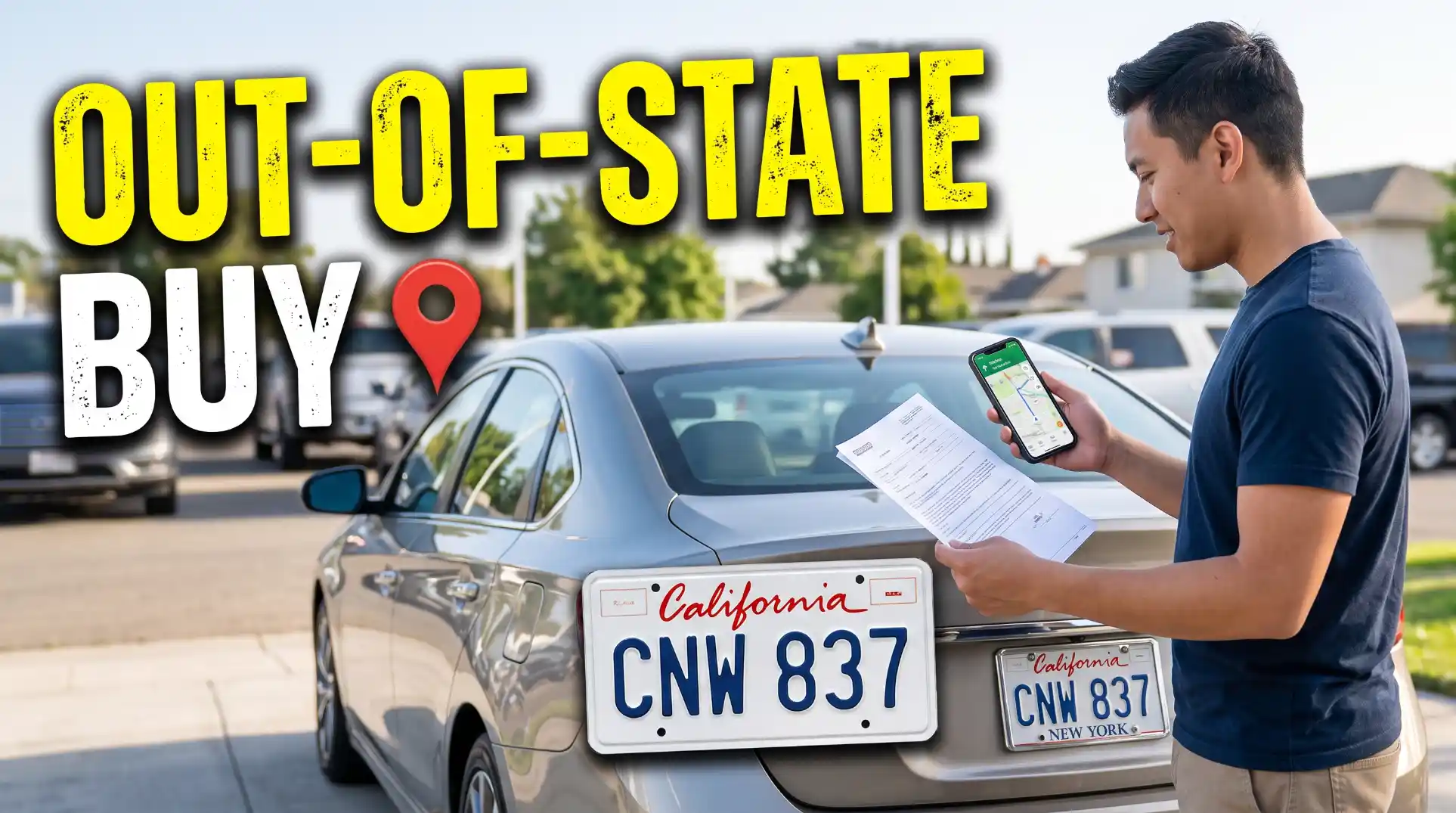
Buying a car out of state can get you a better price or the exact model you want. Yes, you can buy a car in another state and register it at home. In most cases you pay sales tax to the state where you register the car (your home state), not the state where you buy it, so you usually cannot avoid your own state’s tax by shopping elsewhere. You will also need a way to get the car home legally (temporary tags or shipping), insurance before you drive, and your home state’s title, registration and any inspection or emissions checks.
Key Takeaways
- Sales tax: generally paid at your home state rate when you register; some states give credit for tax paid elsewhere.
- Temporary tags: needed to drive the car home; the dealer or the seller’s state DMV issues them.
- Insurance first: call your insurer before you drive off.
- Inspection and emissions: the car must meet your home state’s rules, which can differ.
- Rules vary by state: always confirm with your home DMV before buying.
Why Buy a Car Out of State?
- Wider selection: a specific trim, color or rare model may only be available farther away.
- Lower prices: dealers in some regions price more aggressively, or a private seller may simply have the best deal.
- Better condition: cars from dry, low-salt states often have less rust.
- Online buying: national retailers and online listings make distance less of a barrier.
Downsides and Risks
- Travel or shipping costs can wipe out the savings.
- More paperwork, especially in a private sale.
- Harder to inspect the car or return it if something is wrong.
- Emissions or equipment differences can block registration in some states.
- Flood-damaged or salvage cars are sometimes moved across state lines to hide their history.
How Sales Tax Works When You Buy Out of State
Sales or use tax on a vehicle is usually owed to the state where it will be registered and kept. Common scenarios:
| Situation | What usually happens |
|---|---|
| Buying from a dealer who handles out-of-state sales | Dealer collects your home-state tax and sends paperwork, or collects nothing and you pay when you register |
| Seller’s state collects its tax to issue temporary tags | Many home states give credit for tax paid; you pay only the difference if your rate is higher |
| Private-party sale | Usually no tax at purchase; you pay your home state tax or use tax when you register |
| Home state has no sales tax on cars | You may still owe title fees or other taxes; check whether the seller’s state requires tax for temporary plates |
A handful of states have no general sales tax, but most states charge tax based on where you live and register the car. Tax rules, credits and local rates vary, so confirm with your home state DMV or revenue department before you pay anything.
Step-by-Step: How to Buy a Car Out of State
- Check your home state’s rules: registration documents, inspection, emissions and whether the vehicle is eligible (for example, some states require cars certified to California emissions standards).
- Research the car: run a vehicle history report with the VIN and check for open recalls on NHTSA’s website.
- Get a pre-purchase inspection: hire an independent mechanic or mobile inspection service near the seller.
- Arrange financing: get pre-approved by your bank or credit union; some lenders limit out-of-state or private-party loans.
- Insure the car: add it to your policy before you drive or ship it.
- Complete the purchase: get the signed title (or dealer paperwork), a bill of sale, odometer disclosure and lien release if applicable.
- Get temporary tags or arrange shipping: ask the dealer for a temporary registration, or check the seller’s state DMV for a transit or trip permit.
- Register at home: visit your DMV within the deadline (often 30 days, but it varies), pay tax and fees, and complete VIN verification, inspection or emissions testing if required.
Documents You Will Usually Need
- Signed-over title from the seller (or manufacturer’s certificate of origin for a new car)
- Bill of sale showing price, date, VIN and both parties
- Odometer disclosure statement (often on the title)
- Lien release if the car had a loan
- Proof of insurance
- Driver’s license and proof of residency
- Out-of-state VIN inspection form if your state requires one
- Emissions or safety inspection certificate if required
Dealer vs Private Seller Out of State
| Dealer | Private seller | |
|---|---|---|
| Paperwork | Dealer usually handles most of it | You handle title, tax and registration |
| Temporary tags | Usually issued by the dealer | You may need a trip permit from the seller’s state or your own |
| Sales tax | May collect your home-state tax | Paid when you register at home |
| Financing | Dealer financing available | Need a lender that funds private sales |
| Protection | Some consumer protections and possible warranty | Usually sold as-is |
Driving vs Shipping the Car Home
Driving the car home is cheapest if you can fly or travel to the seller; add up flights, fuel, a hotel and time off. Shipping with an auto transporter often costs several hundred to more than $1,500 depending on distance, open vs enclosed trailer and season. Get multiple quotes, check the carrier’s USDOT number and insurance, and document the car’s condition with photos at pickup.
Safety note: Watch for scams in long-distance deals: sellers who refuse inspections, want payment by wire transfer or gift card, or push you to use an unfamiliar “escrow” or shipping service. Never pay the full amount before verifying the title, the VIN on the car, and the seller’s identity.
Common Problems to Avoid
- Emissions mismatch: a car legal in the seller’s state may not pass your state’s emissions rules.
- Title problems: make sure the name on the title matches the seller and there is no unreleased lien. Check for salvage, rebuilt or flood brands.
- Missing the registration deadline: late registration can bring penalties.
- Paying tax twice: keep receipts for any tax paid in the other state so your home state can apply credit if it allows.
- Recalls and warranty: confirm open recalls and that any warranty transfers and is honored nationwide.
Out-of-State Car Buying FAQ
In most cases you pay sales tax to the state where you register the car, which is usually your home state. Some states collect tax at purchase and your home state may credit it.
Usually not. Your home state typically charges its sales or use tax when you register the vehicle, even if the car was bought in a state with no sales tax.
Get temporary tags from the dealer or a trip or transit permit, and make sure the car is insured before you drive it.
Deadlines vary by state, often around 30 days for new residents or new purchases. Check your home state DMV for the exact limit.
Many states require a VIN verification, safety inspection or emissions test for vehicles coming from another state. Requirements vary.
It can be if the price difference is larger than travel or shipping costs. Sales tax usually still follows your home state.
Often several hundred to more than $1,500, depending on distance, vehicle size, open or enclosed transport and time of year.
Yes. Many banks, credit unions and dealers finance out-of-state purchases, but some lenders limit private-party or out-of-state loans, so get pre-approved first.